Rice, much more than just a food, occupies a central place in the culture and daily life of the Malagasy. Cultivated throughout the island, it is one of the pillars of Malagasy society, both in gastronomy, traditions and rituals. In this country, where rice production remains the main agricultural activity, the white grain has a special meaning. Discover the importance of rice in Malagasy people daily life, a facet of the country that you will discover during your trip to Madagascar.
Rice, an essential staple food
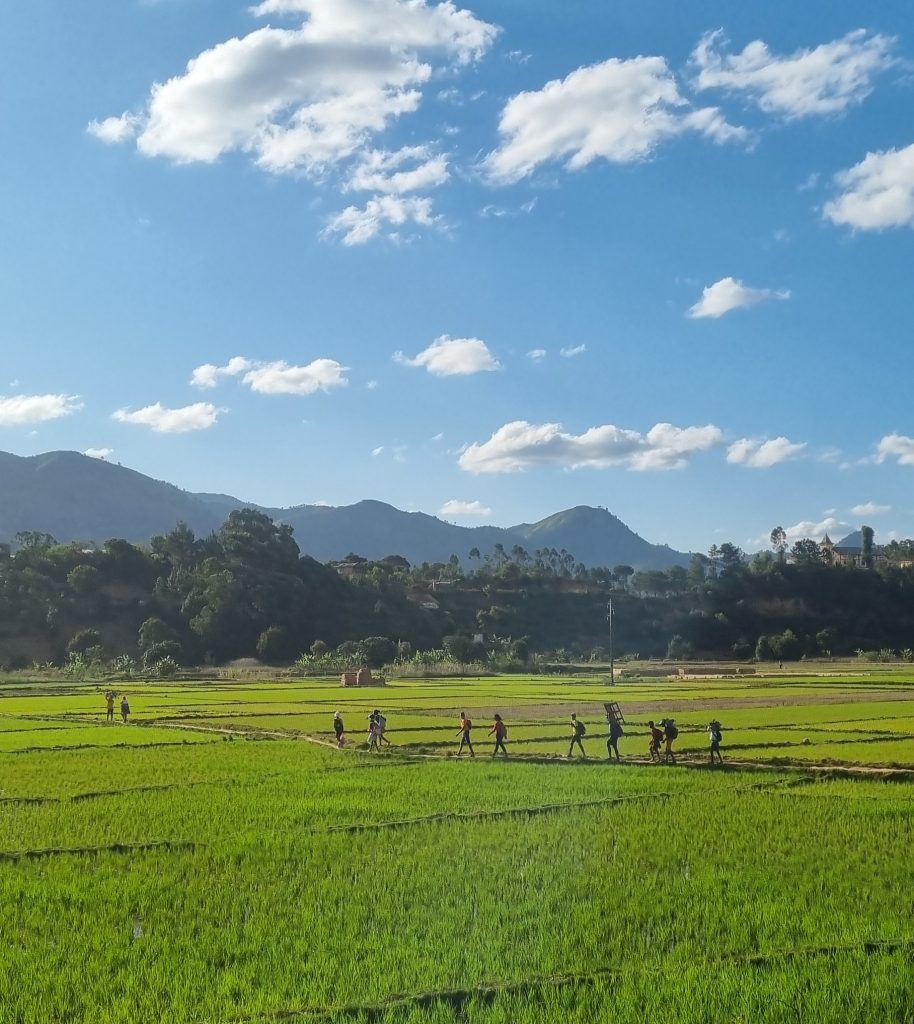
There is no doubt that rice is the staple food in the Malagasy diet and you will confirm it during your Madagascar tour. On average, in Madagascar, rice consumption per year is 138 kg/inhab/year in rural areas and 118 kg/inhab/year in urban areas. It accompanies almost all meals, whether daily or festive. “Vary”, or rice in Malagasy, is often served with “laoka”, various accompaniments such as vegetables, fish, or meat. This combination is at the heart of the Malagasy table, symbolizing the simplicity and richness of an agricultural culture deeply rooted in respect for the land. Moreover, during a cooking-class organized during your tailor-made trip to Madagascar, you will be able to concoct a rice-based meal with local people.

Rice in traditional ceremonies
Rice does not only nourish the Malagasy body; it also nourishes their soul and spirit. In Malagasy culture, rice is a key element in many ceremonies and rituals, where it has sacred significance.
One of the most emblematic customs is that of the “famadihana”, the ceremony of the turning of the dead, an event that you might be able to attend during your Madagascar trip. This Malagasy family ritual, which consists of exhuming the bodies of their ancestors to wrap them in new clothes and celebrate them, is often accompanied by large festivities. Rice, in the form of preparations such as “vary amin’anana” (rice mixed with herbs and vegetables) or “vary hena” (rice accompanied by meat), plays a central role in these celebrations. It is seen as an offering to the ancestors, a way of maintaining their presence among the living and paying them tribute.
Rice and agriculture: a symbol of sustainability
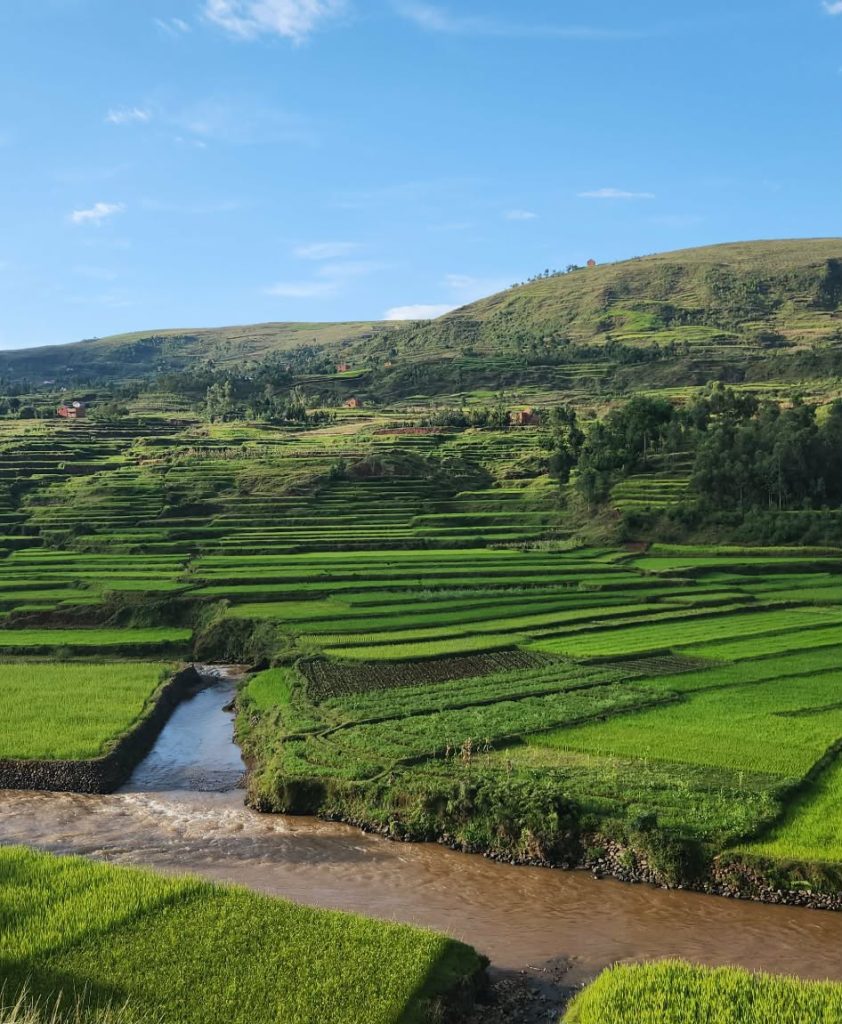
Growing rice in Madagascar is more than just an economic activity; it is also an act of preserving traditions and ancestral knowledge. In rural areas, rice is grown using methods passed down from generation to generation, often in terraced rice fields or irrigated rice fields that you can admire particularly during a Madagascar road trip on the RN7. The “terraced rice field” cultivation system is a striking example of sustainability and environmentally friendly know-how. These methods, which may seem rudimentary, are in reality perfectly adapted to the Malagasy climate and soils.
All in all, rice in Madagascar symbolizes life, abundance, but also the deep bond between the Malagasy and their land.